Ghost Of A Phantom
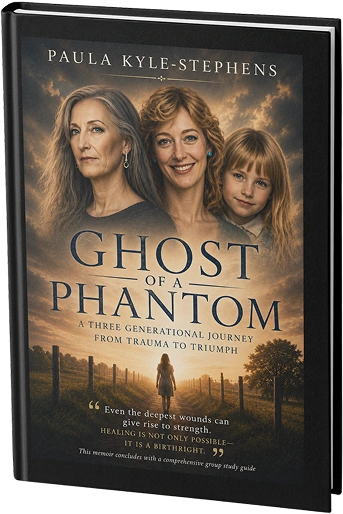
Ghost of a Phantom is a deeply personal memoir by Paula, chronicling her journey from a turbulent childhood through the foster care system to eventual healing and advocacy. The story begins with Paula’s early years in a large, blended military family, marked by frequent relocations and the sudden, mysterious death of her mother while living overseas. This tragedy shatters her family, leading to Paula and her siblings being separated and placed in different foster homes—a traumatic event that leaves lasting scars.
The memoir follows Paula as she navigates a series of foster homes, each with its own challenges, instability, and, at times, neglect or abuse. Despite being uprooted seven times in a single year, Paula’s determination to reconnect with her siblings and find a sense of belonging remains a driving force. The narrative explores the pain of sibling separation, the stigma and confusion of being a foster child, and the emotional toll of not knowing why she and her sisters were taken from their home.
A turning point comes when Paula is welcomed into the home of Larry and Bonnie Ulrey, foster parents whose compassion, patience, and unconditional love provide the stability and acceptance she desperately needs. Through their guidance, Paula learns the importance of forgiveness, self-worth, and hope. The Ulreys become her “roadmap to fostering,” showing by example how foster parents can truly change a child’s life.
The memoir also delves into Paula’s struggles with trauma, PTSD, and the long-term effects of her childhood experiences. She candidly shares her journey through young adulthood, relationships, motherhood, and the ongoing process of healing. The story is enriched by the voices of her siblings, foster parents, and her own daughter, offering multiple perspectives on the impact of foster care and family separation.
As Paula grows, she transforms her pain into purpose – becoming a speaker, mentor, and advocate for foster youth and families. She co-founds a nonprofit to support at-risk youth and develops training programs for foster parents, using her story to inspire change and offer hope to others.
Ghost of a Phantom is ultimately a testament to resilience, the power of compassion, and the enduring search for belonging. It is both a call to action for improving the foster care system and a beacon of hope for anyone who has faced adversity, showing that healing and new beginnings are possible—even after the darkest storms.
Excerpts

1. “Before I could climb inside the caseworkers car, six-year-old Debbie, always the little rebel, burst out of the garage. Her face streaked with tears; her sobs raw and pleaded as she clung to me, desperate for reassurance. The fear in her eyes was unmistakable—a child’s terror of being left behind, at losing the only family she truly knew. ‘Will you ever come back?’ She cried, her voice trembling with longing and dread. I was paralyzed, unable to offer comfort, my own grief threatening to overwhelm me. In that moment, Debbie pressed a small mirror into my hand—a gift, she said, so I would not forget her. The gesture was so heartbreakingly earnest that it cut through my numbness, and guilt surged within me.”
2. The Power of Hope and Resilience
“GHOST OF A PHANTOM is a memoir born from that moment of rupture. It is a story of what happens when the battlefield follows you home, when trauma becomes inheritance, and when the world you trust is swept away in a single afternoon. With nothing but a paper bag of belongings and a heart full of questions, I began a journey through foster care, longing, and the labyrinth of searching for family. Yet, this is not only a story of loss. Woven through the darkness is a thread of hope—sometimes faint, sometimes dazzling as a rainbow after rain.”
3. The Transformative Power of Acceptance
“Their only daughter was twenty-three—her name was Linda. Though she no longer lived with her parents, she visited every day, bringing a sense of family and continuity to my new life. This home, set on a large farm with two horses, felt like a dream come true for me. Horses had always been my hope for someday, and now, here they were—a symbol of new beginnings. … Moving in with the Ulrey’s was both overwhelming and hopeful. I remember feeling alone, missing my siblings deeply, and unsure how to fit into this new family. Yet, from the very beginning, they showed me compassion and acceptance. They did not just give me a place to stay—they gave me a sense of belonging and made me feel seen, even when I struggled with the silence and the attention that came with being the only child. Their kindness helped me heal, and their patience taught me that it was okay to be myself, even when I was hurt.”

Other Books

Tiptoeing Through a Trigger Minefield
What Tiptoeing Through a Trigger Minefield
What Tiptoeing Through a Trigger Minefield Is and Why It Exists
Tiptoeing Through a Trigger Minefield exists because too many people live inside trauma responses without ever being told the truth about what they are experiencing. It was written to name what has long gone unnamed to give language, structure, and context to reactions that have been misunderstood, misdiagnosed, and blamed on character rather than recognized as survival.
At its core, this book is about how a nervous system adapts when danger is not an event, but an environment. It traces how repeated exposure to fear, coercion, betrayal, and powerlessness, especially in childhood plants an internal minefield where the body learns to anticipate harm long after the original danger has passed. These mines are not memories alone; they are reflexes, sensations, shutdowns, and alarms that activate in ordinary moments, confusing both the person experiencing them and the people around them.
The memoir was brought to light because the author lived most of her life walking through this minefield without a map.
From early childhood, the author was shaped by prolonged, relational trauma rather than a single catastrophic event. Her home was dominated by constant interrogation, psychological warfare, and fear conditions that taught vigilance, silence, and self-erasure as necessities. Central to this environment was her mother, a woman subjected to relentless coercive pressure to confess to something that did not happen. The interrogation did not pause. It did not resolve. It did not allow for rest or safety.
In order to endure this unrelenting psychological assault and to prevent her children from growing up watching the full, raw brutality of her treatment the author’s mother turned to medication as a means of endurance, not escape. Her substance use is not presented as addiction in the moral or pathological sense, and it is not portrayed as the cause of her death. It is framed as a last-ditch survival strategy: a way to remain standing, to function, and to shield her children from constant exposure to terror.
The memoir is explicit and careful on this point: the author’s mother did not die from addiction. Her death was sudden, unexplained, and remains unresolved. No definitive cause was ever established, and the circumstances surrounding her death were never fully brought to light. What followed was not truth, but narrative one imposed on the children, in which blame was assigned where it did not belong, and reality was overwritten by convenience. This unresolved loss, and the false responsibility placed on the children afterward, became one of the deepest mines in the author’s internal landscape.
As the book unfolds, it becomes clear that the trauma did not end with childhood. Foster care separation, the fracturing of sisterhood, institutional failure, medical betrayal, coercion, adult violence, and later-life losses all collide with a nervous system already trained to survive. Each new trauma does not stand alone it detonates earlier ones, explaining why reactions intensify rather than fade, and why “moving on” is not a simple act of will.
A central figure throughout the memoir is what the author calls the Phantom her name for the embodied presence of Complex PTSD. The Phantom is not portrayed as an enemy, but as a once-necessary protector: the part of the nervous system that learned to stay alert, anticipate danger, and act quickly to prevent harm. For decades, this Phantom ran the show, hijacking reactions, relationships, and self-perception because no one ever explained what it was.
That silence is one of the primary reasons this book was written.
Despite decades in therapy, the author was never taught what PTSD was, what Complex PTSD was, or what triggers are. She was never given language for why the past kept showing up in the present, or why her body reacted before her mind could catch up. Without that knowledge, she, like so many others, assumed the problem was personal failure rather than biological learning.
Tiptoeing Through a Trigger Minefield exists to correct that injustice.
The book weaves personal narrative with trauma-informed explanation to show that hypervigilance, freeze, fawn, silence, appeasement, shutdown, and anticipatory fear are not flaws. They are coherent, intelligent adaptations formed under conditions where safety was unreliable and power was misused. The memoir insists that survival is not pathology and that healing does not begin with exposure, confession, or “fixing,” but with understanding.
Equally important, the book challenges how trauma is interpreted in families, systems, therapy, and culture. It addresses sibling trauma, the generational transmission of vigilance, and how children are often blamed for the damage done to them. It calls out institutional failures not with spectacle, but with clarity arguing that education is not optional in trauma care. People deserve to know what is happening in their bodies before they are asked to interpret their lives.
Ultimately, Tiptoeing Through A Trigger Minefield is not about erasing the past or becoming fearless. It is about reclaiming reality. It is about naming what happened accurately, returning responsibility to where it belongs, and learning to walk through the internal landscape with awareness instead of self-blame.
The book was brought to light because silence kept too many people trapped walking carefully without knowing why, apologizing for reactions that once kept them alive. This memoir offers what the author was denied for most of her life: a map, a language, and permission to stop treating survival as something shameful.
The final truth the book leaves the reader with is simple and hard-earned:
You are not broken.
You were paying attention.
And understanding the minefield does not trap you in it, it shows you where you are, and where you are not anymore.
Coming soon: This memoir has a companion trauma workbook

Kaleidoscope
The Girl Who Looked Fine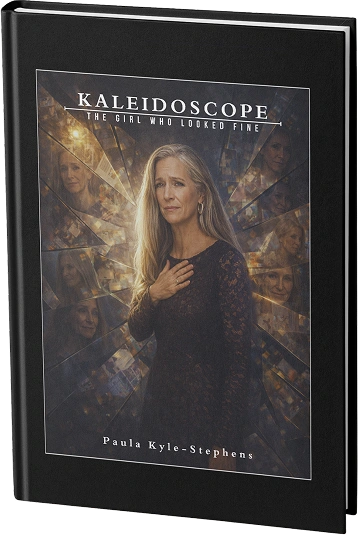
Journey Through Trauma
Kaleidoscope: The Girl Who Looked Fine is a powerful and unflinching memoir about what happens when survival is mistaken for strength and silence is mistaken for healing.
From the outside, Paula Kyle‑Stephens was “the girl who looked fine”: capable, compliant, high‑functioning, and composed. Teachers saw a quiet child. Adults saw resilience. Later, colleagues saw success. What no one saw was the invisible cost of growing up inside prolonged trauma and the lifelong consequences of being forced to adapt without truth, language, or protection.
Through vivid, layered storytelling, Paula invites readers into a life shaped by early loss, foster care, coercive control, and systemic silence. Rather than presenting trauma as a single event, Kaleidoscope reveals how trauma becomes an environment fragmenting identity, embedding itself in the nervous system, and shaping the body long after the danger has passed. The memoir traces the author’s journey from childhood survival through decades of unexplained physical illness, emotional hypervigilance, and misdiagnosis, to the eventual discovery of language that finally made her life make sense.
This is not a story about being broken. It is a story about adaptation—about how children learn to perform “fine” when the truth is unsafe to tell, and how those adaptations can follow a person into adulthood, disguising pain as competence and endurance as character. With honesty, courage, and deep compassion, Paula explores Complex PTSD, somatic trauma, disenfranchised grief, and the long arc of healing that begins not with forgetting, but with naming.
More than a memoir, Kaleidoscope is a call to attention. It asks readers parents, educators, clinicians, and communities to look beyond appearances, to question what “functioning” really means, and to recognize the quiet signs of suffering in those who seem to be doing just fine.
A Unique and Powerful Conclusion: Comprehensive Group Study
The memoir concludes with a comprehensive group study and reflection guide, making Kaleidoscope an invaluable resource not only for individual readers, but also for book clubs, support groups, classrooms, and professional settings. This section includes guided reflections, discussion questions, case‑based insights, and practical prompts designed to deepen understanding, foster meaningful conversation, and support collective healing. The group study transforms the memoir into an interactive experience inviting readers to engage, reflect, and apply what they’ve learned in a safe, structured way.
Kaleidoscope: The Girl Who Looked Fine is ultimately a story of truth reclaimed. It is for anyone who has ever felt unseen, misunderstood, or exhausted by the effort of looking okay. And it is a testament to what becomes possible when the truth is finally given language and the lens is turned just enough for the full picture to be seen.
The Girl Who Looked Fine
Leftovers
Healing Wounds That Do Not BleedA Memoir
Leftovers – Healing Wounds That Do Not Bleed is a raw, unflinching memoir about the kind of trauma that leaves no visible scars yet quietly shapes an entire life. It tells the story of a woman who grew up inside generational trauma, psychological warfare, foster care, and systemic silence and who lived for decades carrying the “leftovers” of experiences she could not yet name.
This memoir centers on Complex PTSD (C‑PTSD) long before the diagnosis was widely understood. Leftovers portray trauma as a buildup of prolonged fear, interrogation, gaslighting, abandonment, and survival that reshape the nervous system, identity, and body. The wounds do not bleed, but they echo through memory, behavior, health crises, relationships, and self‑perception.
The book traces the author’s childhood in a military household marked by control, fear, and psychological domination, followed by abrupt separation from siblings and placement into foster care. What follows is a lifetime of unanswered questions, misdiagnoses, and repeated emotional crises that never made sense until much later. The memoir captures the experience of living in constant survival mode while appearing functional, responsible, and capable of the outside world.
A central thread of Leftovers is the devastating power of lies, labels, and silence. The author explores how false narratives spoken by authority figures, institutions, and family members can fracture identity and poison self‑worth. She reveals how children absorb blame for what was done to them, and how those beliefs quietly follow them into adulthood.
The memoir also documents the physical cost of unresolved trauma. Recurrent medical emergencies, surgeries, and unexplained health crises run parallel to emotional triggers, demonstrating how trauma embeds itself in the body when it has nowhere else to go. The author’s eventual diagnosis of Complex PTSD becomes a turning point not a cure, but a framework that finally makes the past intelligible.
Interwoven throughout the narrative are moments of unexpected grace: foster parents who provided safety, mentors who believed in the author’s voice, and healing environments that offered brief refuge from chaos. These moments do not erase the damage, but they interrupt it proving that compassion can coexist with cruelty, and that survival does not happen alone.
Throughout the memoir, Leftovers moves from uncertainty to understanding. The author begins to understand triggers, trauma responses, and the long‑term effects of living under constant threat. She names what had once been invisible and begins reclaiming agency over her mind and body. Education becomes a form of power; understanding trauma becomes the first step toward freedom.
Ultimately, Leftovers – Healing Wounds That Do Not Bleed is not just a personal story, but a testimony for those who have spent their lives wondering why they are “too much,” “too sensitive,” or “never fully okay.” It gives language to survivors whose pain was minimized, misunderstood, or misdiagnosed and validates the reality that some wounds are inherited, invisible, and deeply real.
This memoir is for survivors of childhood trauma, foster care, domestic psychological abuse, and Complex PTSD. It is for those who have done everything “right” and still felt broken. Most of all, it is for anyone carrying the leftovers of a past that never properly ended and who needs to know that healing begins with truth.
This Memoir has a Companion Trauma Workbook
Triumph and Hope
Healing Wounds That Do Not Bleed

Reclaiming Her
A Woman’s Way Back to Herself
A Memoir
Reclaiming Her – A Woman’s Way Back to Herself is a deeply embodied memoir about what happens after survival after the trauma has been named, after the patterns have been recognized, and after a woman realizes that understanding her wounds is different from living freely inside herself.
This book is not about recounting trauma in detail. It is about returning to the body, to the voice, to rest, to boundaries, to intuition, and to identity. It chronicles the author’s lived journey of moving out of survival mode and into conscious inhabitation of her own life.
The memoir opens with the truth that many women quietly carry some were wounded before identity had time to form. For these women, healing is not a return to a former self, because there was never a safe “before.” Instead, Reclaiming Her explores what it means to build identity forward not through force or fixing, but through safety, presence, and choice.
Structured as a blend of personal narrative, reflection, and trauma-informed wisdom, the book traces the author’s reconnection with her body after years of disconnection. She learns to listen to physical signals once ignored fatigue, tension, hunger, restlessness not as weaknesses, but as communication. Nature becomes a central companion in this return, offering stillness, symbolism, and rhythm that mirror the author’s gradual softening back into herself.
As the memoir unfolds, the reader follows the author through pivotal reclamation points: nourishing the body without punishment, redefining movement as medicine rather than discipline, and understanding how trauma lives not only in memory but in muscles, breath, and posture. The book emphasizes that healing does not happen through intensity, exposure, or relentless effort, but through gentle consistency and nervous system safety.
A core theme of Reclaiming Her is boundaries learning to say no without collapse, guilt, or explanation. The author examines how women are conditioned to carry emotional labor, absorb stress, and disappear for the comfort of others, and how reclaiming selfhood requires becoming someone who decides. Boundaries are presented not as rejection, but as protection and self-respect.
The memoir also moves inward, addressing inherited beliefs, generational scripts, and the inner voices that were shaped by survival rather than truth. Through compassionate self-inquiry and inner-child work, the author begins repairing the places that froze in childhood, offering the younger self what was once missing: safety, validation, and presence.
Rest emerges as a sacred and radical act. In a culture that glorifies exhaustion, Reclaiming Her reframes stillness as medicine and rest as resistance. The author documents her shift from burnout and overextension into a life structured around sustainability, ritual, and alignment where care is no longer something earned, but something assumed.
As the memoir moves toward its conclusion, it widens beyond the self to include community, voice, and purpose. The author reflects on the power of women gathering, storytelling, mentorship, and shared healing. Owning one’s voice becomes not only personal liberation, but an offering proof that survival can be transformed into wholeness.
Ultimately, Reclaiming Her – A Woman’s Way Back to Herself is about becoming not despite what was endured, but because safety has finally made space for choice. It affirms that a woman is not late to her life when she begins again; she is arriving exactly when she is ready to live from her center.
This memoir is for women who feel fragmented, exhausted, or disconnected not because they are broken, but because they spent years surviving. It offers a grounded, compassionate path back into the body, back into truth, and back into a life that no longer requires self-abandonment.
Reclaiming Her is not the end of a healing journey.
It is the moment the story finally belongs to the woman living it.
A Woman’s Way Back to Herself
Footprints in the Paradise Forest
A Collection of Brave Days and Borrowed Cowbot Hats
Footprints in the Paradise Forest: A Collection of Brave Days and Borrowed Cowboy Hats is a deeply moving and often humorous memoir about what happens when people, especially children are given space instead of pressure, presence instead of instruction, and animals instead of answers.
Set at Paradise in the Sky, a nature‑based, equine‑centered sanctuary Co-Founded as a 501c3 Non-Profit by author Co-Founder, Paula Kyle‑Stephens, the book weaves together true stories of children, families, volunteers, and animals whose lives intersect in a quiet stretch of woods where healing is never forced and courage is allowed to emerge on its own terms.
This is not a book about fixing people. It is about making room.
Across vivid, story‑driven chapters, readers meet foster children discovering confidence beside miniature horses, teens learning patience by sharing animals and space, adults releasing long‑held grief through breath and stillness, and individuals with profound disabilities experiencing connection without barriers. Horses, donkeys, and dogs are not symbols or metaphors here they are active participants: listeners, teachers, protectors, and mirrors who respond not to words, but to truth.
From a joyful, braying miniature donkey who leads children into laughter, to a massive draft horse who instinctively lowers her head to meet motionless hands, each animal meets people exactly where they are. In doing so, they help reveal something essential: bravery doesn’t roar. It whispers. It waits. And it often shows up wearing muddy boots and a borrowed cowboy hat.
Interwoven with these encounters are reflections from the author’s own life on foster care, loss, disability, belonging, and the long shadows trauma can cast. Through these experiences, Footprints in the Paradise Forest explores how nature and animals communicate in ways humans often forget, and how healing can happen without therapy language, diagnoses, or timelines.
At its core, this memoir is about the footprints we leave behind not just in soil and forest paths, but in memory. The kind that lingers long after a day ends. The kind that quietly changes how a child sees themselves, or how an adult remembers what gentleness feels like.
Written with warmth, humor, reverence, and emotional honesty, Footprints in the Paradise Forest invites readers to slow down, listen closely, and believe just a little that places can hold stories, animals can meet us where we are, and sometimes the most important journeys happen at a walking pace.
Footprints in the Paradise Forest has a companion Workbook for TEENS

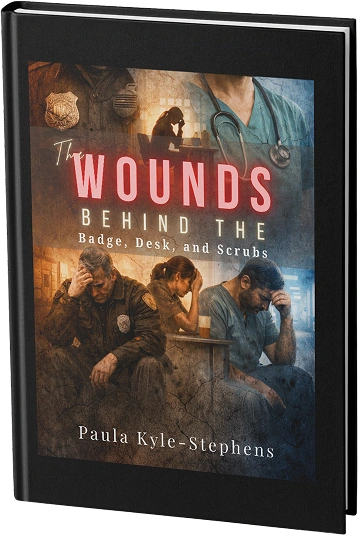
The Wounds Behind the Badge, Desk, and Scrubs
Journey Through Trauma
The Wounds Behind the Badge, Desk, and Scrubs – This memoir highlights the psychological toll experienced by case workers, safety personnel, and hospital staff exposed to trauma and crisis in their jobs. Rather than focusing on single catastrophic events, the book centers on accumulation over time, challenging the deeply rooted belief that endurance is proof of strength, suitability, or resilience.
Written by Paula Kyle-Stephens, a former Nationally Registered EMT, Ohio Firefighter 1A, and former Coordinator and Director of a county-wide Critical Incident Stress Debriefing (CISD) team, the book draws on both professional and lived authority. In her CISD leadership role, Kyle-Stephens worked directly with first responders, healthcare professionals, and other high‑exposure roles, facilitating structured debriefings based on the Jeffrey Mitchell model and witnessing firsthand how safety, sequencing, and shared processing allow traumatized nervous systems to stand down after critical incidents.
The narrative is further grounded in Kyle-Stephens’ personal history of layered, early trauma including war‑related family injury, loss, separation, and foster care that remained undiagnosed until later in life, long before Complex PTSD was widely recognized.
For decades, she functioned outwardly within demanding systems while her nervous system absorbed the cumulative cost of unprocessed trauma, manifesting in chronic hypervigilance, repeated medical collapse, and significant physical illness. This dual perspective both as a responder within trauma‑exposed systems and as someone who lived with unrecognized trauma gives the book its distinctive clarity and ethical precision.
Through this lens, the book reframes PTSD and moral injury in helping professions as predictable occupational outcomes, not personal failures. It argues that when exposure is constant, responsibility is high, and recovery is absent, injury is not an exception to the design result.
Professional cultures that prize silence, reward functionality, and conflate resilience with invulnerability teach helpers to adapt rather than recover, often mistaking survival strategies—hypervigilance, emotional narrowing, detachment for health.
Rather than offering quick fixes or self‑care prescriptions, the book insists on a trauma-informed ethical shift: moving responsibility away from individual stamina and back toward systems, leadership, and organizational design. It rejects the romanticization of suffering and resilience narratives that suggest pain is necessary, meaningful, or redemptive. Validation, as framed here, is not consolation or celebration it is the clear acknowledgment that harm was harmful, and that adaptation was necessary, not virtuous.
The concluding chapters articulate a grounded vision of hope that does not require denial, optimism, or transformation through pain. Healing, the book argues, does not depend on finding meaning in what damaged people, but on creating conditions that allow recovery without spectacle: shared responsibility, honest naming, predictable support, and environments that stop relying on silent sacrifice.
Written for those who stay, those who leave, and the systems that depend on them, The Wounds Behind the Badge, Desk, and Scrubs serves as both testimony and structural critique calling for trauma-informed cultures that protect the humanity of helpers rather than consuming it.
The Badge, Desk, and Scrubs
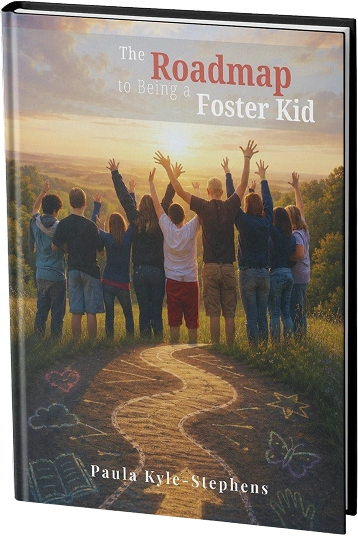
The Roadmap to Being a Foster Kid
Every child entering foster care should be handed a road map to the next leg of their journey because no child should have to face that moment alone, confused, and afraid.
What happens when a child is suddenly told they are going into foster care with no explanation, no preparation, and no understanding of what comes next?
The Roadmap to Being a Foster Kid is a powerful, compassionate memoir and guide written from lived experience. Paula Kyle-Stephens takes readers back to the moment her life changed at just twelve years old when she and her sisters were separated, placed into different homes, and left to navigate fear, confusion, and uncertainty without answers.
Written directly for children in foster care, this book becomes the road map the author never had.
Blending personal storytelling with gentle guidance, Paula offers a calm, honest voice that speaks to the realities of entering foster care: overwhelming emotions, unanswered questions, unfamiliar people, and the deep sense of loss. Through each chapter, she provides reassurance, clarity, and simple tools to help children feel less alone and more grounded in a situation that often feels out of control.
More than a memoir, this book is a steady companion during one of life’s most disorienting moments. It helps young readers:
- Understand what foster care is and what it is not
- Recognize that their feelings are valid and normal
- Learn simple ways to manage fear, anxiety, and overwhelm
- Build confidence in asking questions and finding support
- Separate their identity from the label of “foster kid”
- Know, without a doubt, that none of this is their fault
At its heart, The Roadmap to Being a Foster Kid is a message of comfort, resilience, and hope. It reminds children that even in unfamiliar places, kindness can exist, healing is possible, and they are still in control of their voice, their story, and who they become.
Told with warmth, honesty, and deep empathy, Paula’s story offers something rare: a guide written by someone who has truly been there and who now reaches back to say:
You are not alone. Not even a little.